

The Philosophy of Gears: The Mechanism of Your Everyday Life in the Corporate World
Your life is a system of precise gears
In the corporate world, we are used to managing projects, schedules, KPIs, and processes. Every system operates according to a specific logic — just like the mechanism of a clock or a gear in an engine.
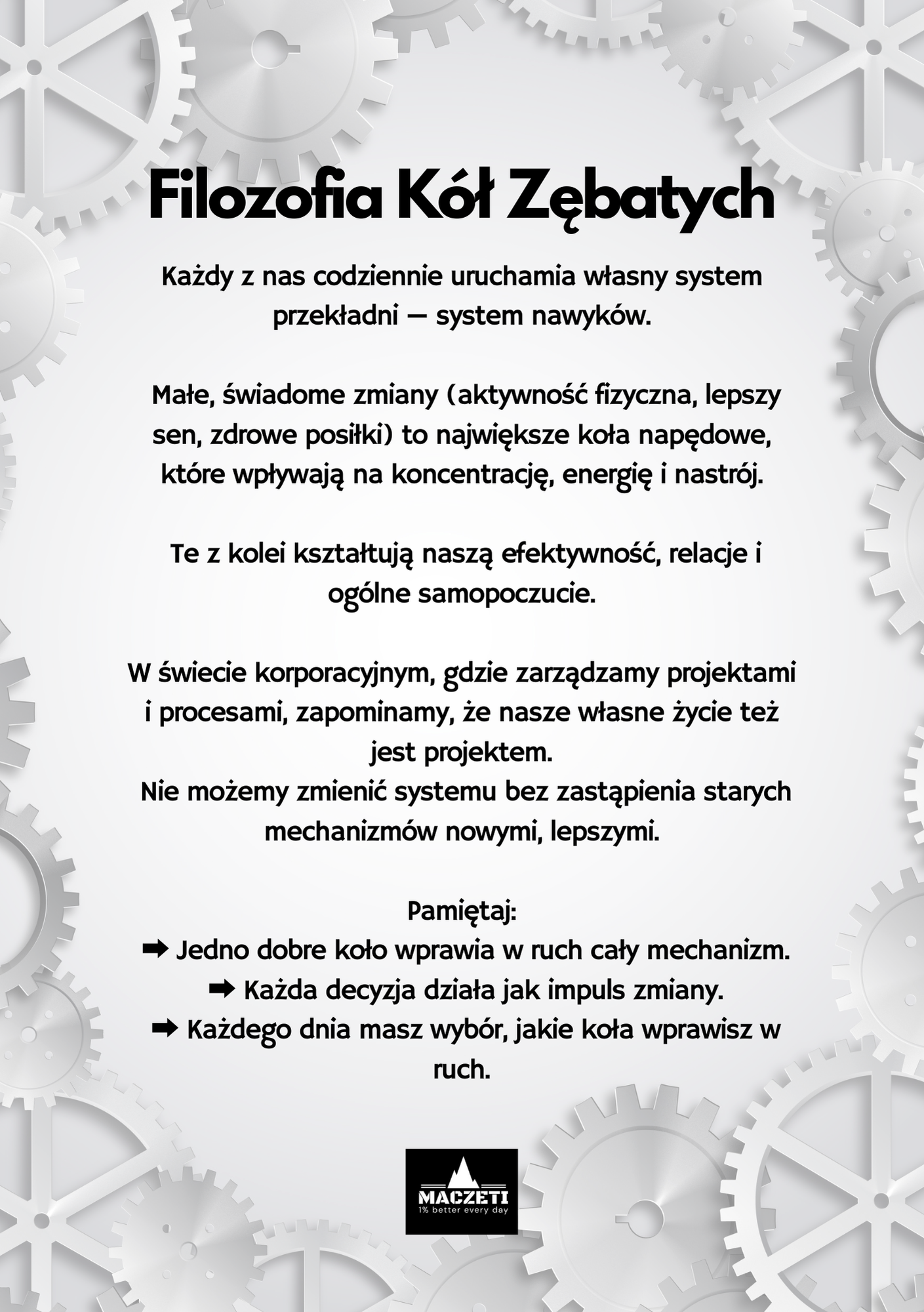
In your personal life, the same principle applies: your habits are the gears that drive your personal system — your energy, health, relationships, and work performance.
Every habit — both good and bad — initiates movement. Imagine that every choice, every decision is setting in motion a mechanism that over time builds your entire lifestyle.
The question is: do your gears lead you to efficiency, health, and satisfaction... or conversely — to frustration, fatigue, and burnout?
Habit as the driving force of the system
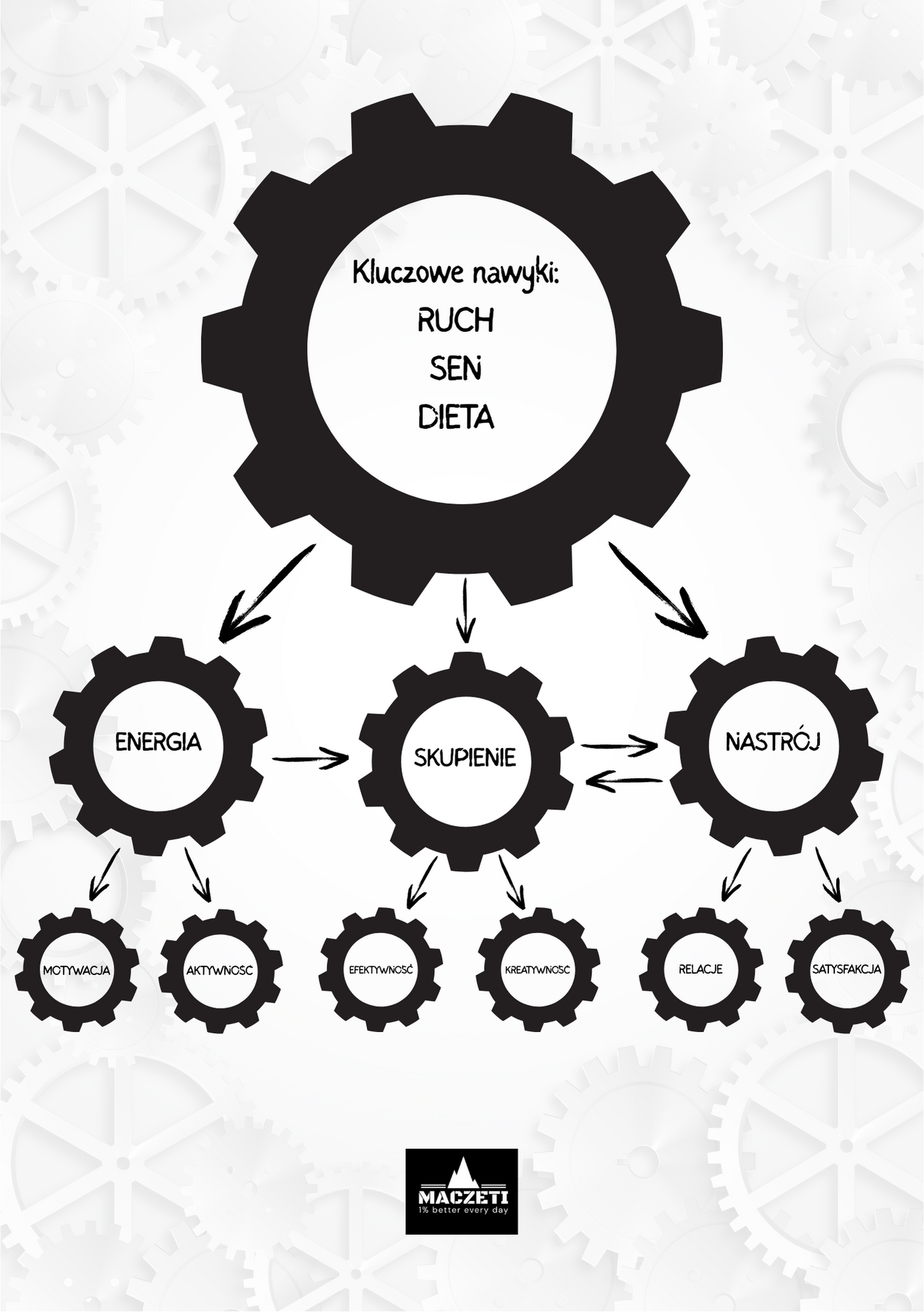
In mechanics, the principle of gear operation is clear: a large wheel sets smaller ones in motion, which in turn set even smaller ones, creating a chain of dependencies.
In the world of habits, it works identically.
An example from corporate life:
- One small wheel — the decision to engage in a short physical activity after work — improves your concentration the next day.
- Better concentration leads to higher project efficiency.
- Higher efficiency shortens task completion time, giving you more free time.
- More free time reduces stress levels and increases life satisfaction.
- Higher satisfaction increases your engagement in work and family life.
A small change causes a domino effect throughout your life.
Analogously — a bad habit, such as lack of movement, thoughtless eating, or chronic overtime, causes the entire system to
Your life is a system of precise gears
In the corporate world, we are used to managing projects, schedules, KPIs, and processes. Every system operates according to a specific logic — just like the mechanism of a clock or a gear in an engine.
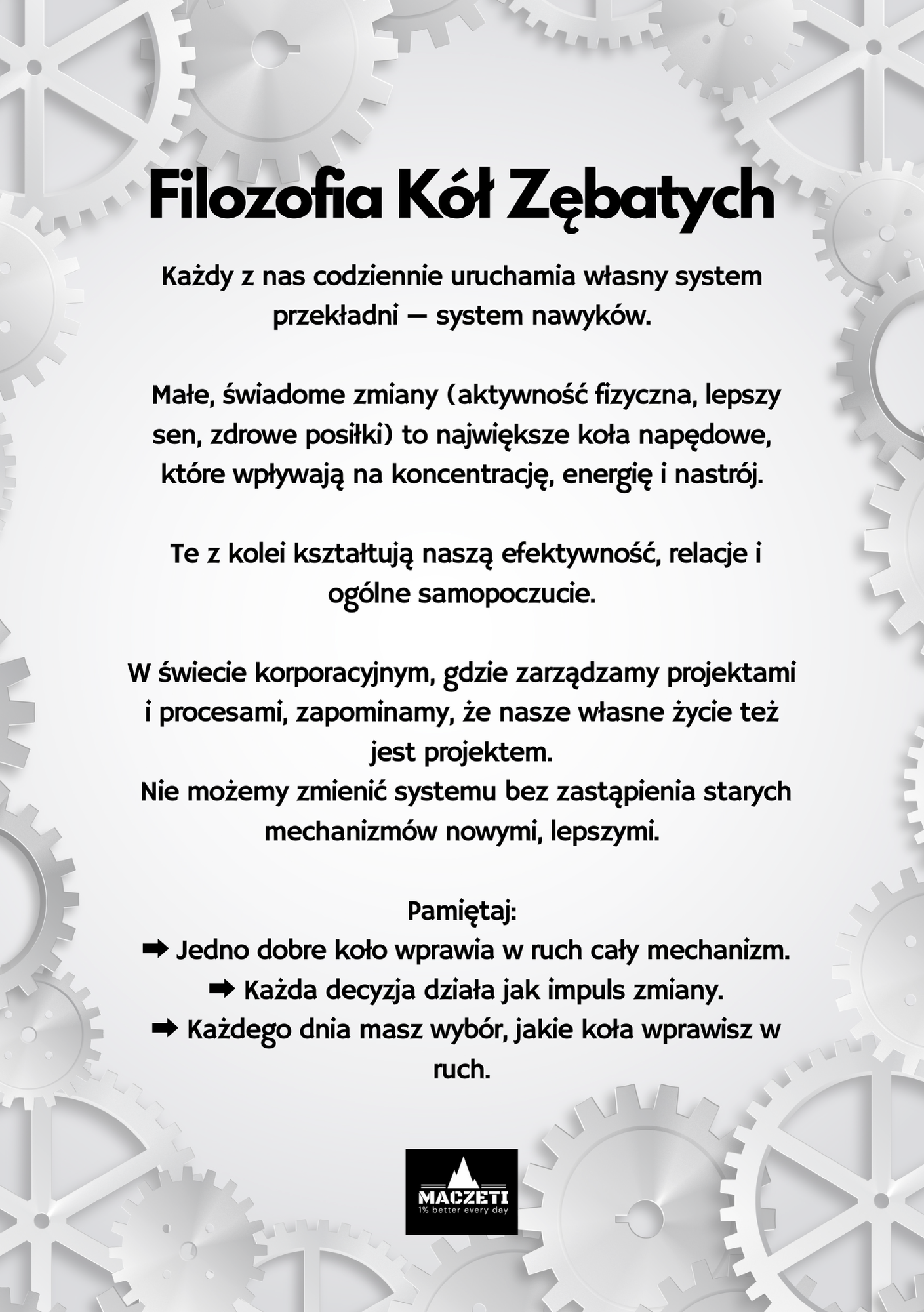
In your personal life, the same principle applies: your habits are the gears that drive your personal system — your energy, health, relationships, and work performance.
Every habit — both good and bad — initiates movement. Imagine that every choice, every decision is setting in motion a mechanism that over time builds your entire lifestyle.
The question is: do your gears lead you to efficiency, health, and satisfaction... or conversely — to frustration, fatigue, and burnout?
Habit as the driving force of the system
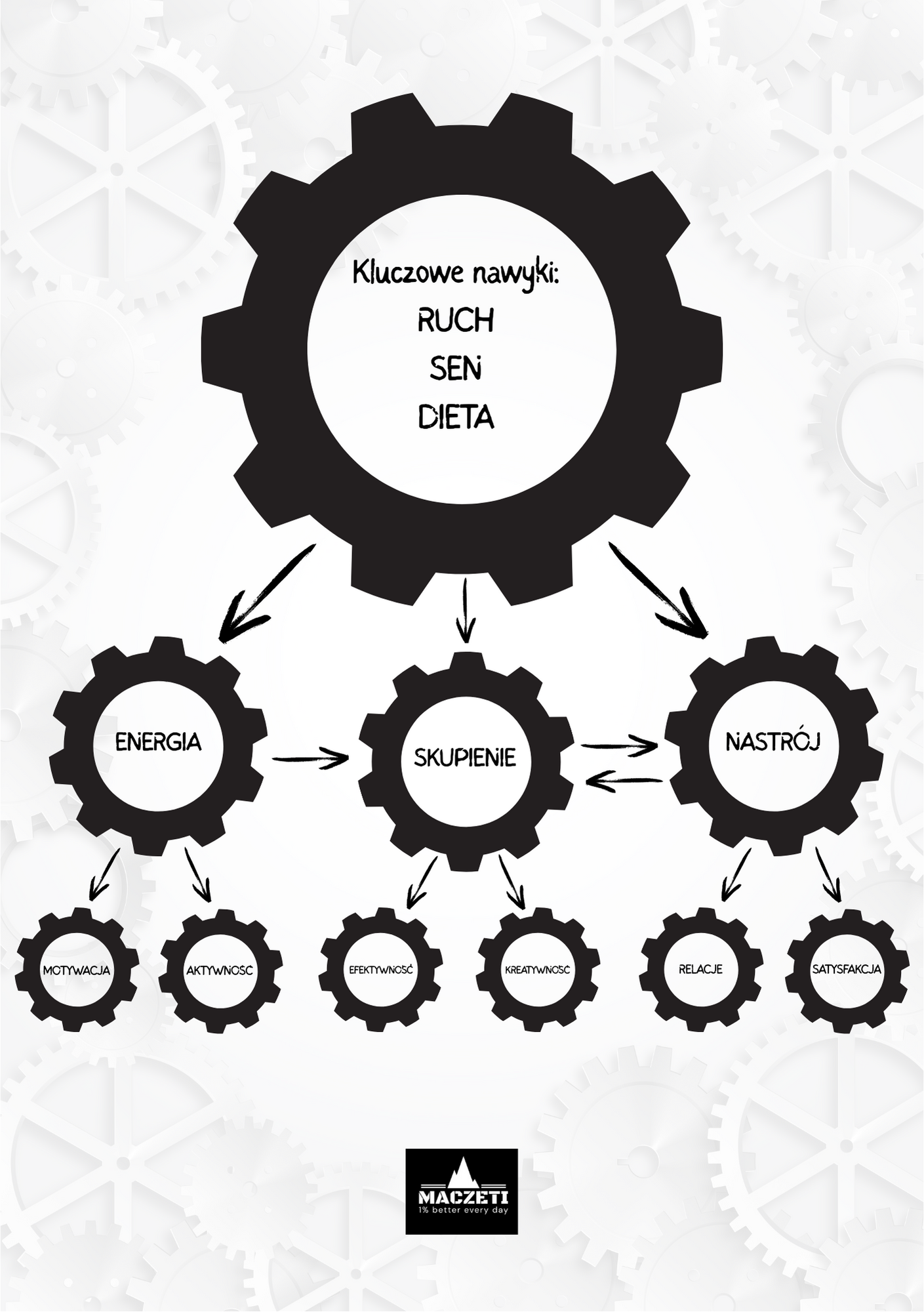
In mechanics, the principle of gear operation is clear: a large wheel sets smaller ones in motion, which in turn set even smaller ones, creating a chain of dependencies.
In the world of habits, it works identically.
An example from corporate life:
- One small wheel — the decision to engage in a short physical activity after work — improves your concentration the next day.
- Better concentration leads to higher project efficiency.
- Higher efficiency shortens task completion time, giving you more free time.
- More free time reduces stress levels and increases life satisfaction.
- Higher satisfaction increases your engagement in work and family life.
A small change causes a domino effect throughout your life.
Analogously — a bad habit, such as lack of movement, thoughtless eating, or chronic overtime, causes the entire system to
3 users upvote it!
0 answers