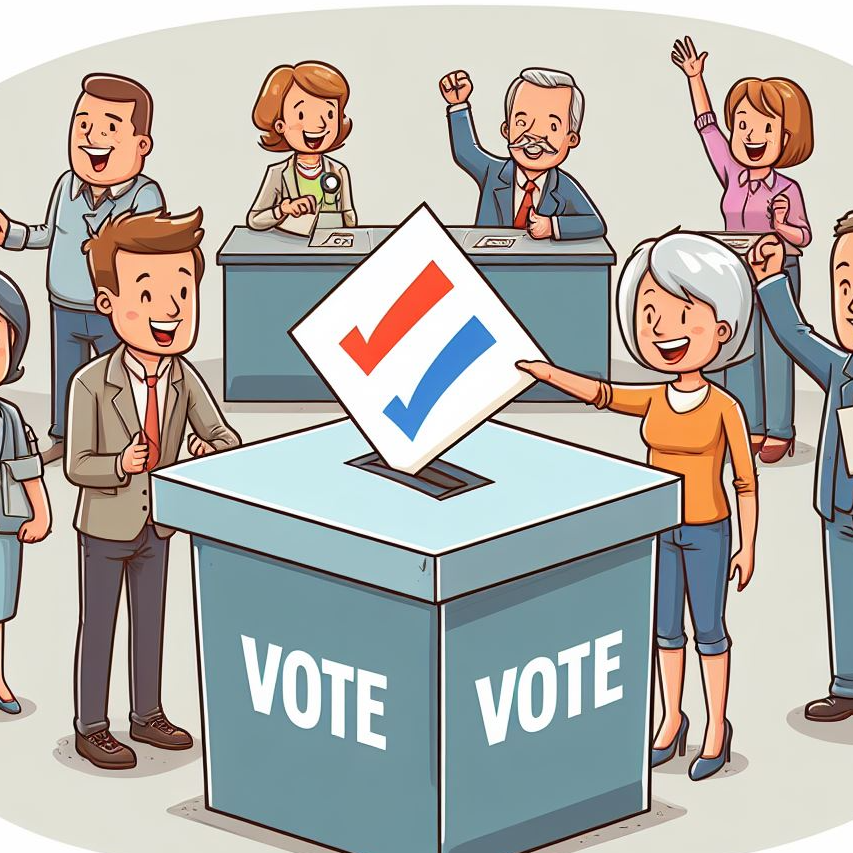
What is direct democracy and why was this group formed?
The inspiration to create this group is the current political situation in Poland, where citizens have received a referendum for the second time since the fall of communism, which was filled with political propaganda and had no value as a decision-making tool. This contrasts with numerous citizen initiatives that were hindered by centers of power.
The problem does not concern a specific political option but the entire state system, where power is strongly limited to specific groups, while the threshold for an average citizen to participate is extremely high. Even if a citizen manages to obtain a sufficient number of votes to sit in the parliament and actively participate in governance, they face the need to collect an impossible number of signatures, then the electoral threshold, and finally a system that promotes allocating seats to the largest parties. Ultimately, such a citizen, unwilling to give up the possibility of influencing state policy, must join some interest group, adhere to its principles, and be subject to the influence of the groups financing it.
We want to move away from a situation where the will of society is ignored by successive governments and where governments can only be chosen from a limited number of interest groups. In this group, we focus on both the issue of what such democracy could look like, and above all, on what to do to implement such a form of government. Through grassroots initiatives and public education, we strive to raise awareness among citizens about what power in the state can look like, and we identify and highlight the obstacles posed by the current power system that limit society's influence on the shape of the state.
One example of what such democracy could look like is principled democracy, which was discussed on the channel LubBezpośrednioPL.
The inspiration to create this group is the current political situation in Poland, where citizens have received a referendum for the second time since the fall of communism, which was filled with political propaganda and had no value as a decision-making tool. This contrasts with numerous citizen initiatives that were hindered by centers of power.
The problem does not concern a specific political option but the entire state system, where power is strongly limited to specific groups, while the threshold for an average citizen to participate is extremely high. Even if a citizen manages to obtain a sufficient number of votes to sit in the parliament and actively participate in governance, they face the need to collect an impossible number of signatures, then the electoral threshold, and finally a system that promotes allocating seats to the largest parties. Ultimately, such a citizen, unwilling to give up the possibility of influencing state policy, must join some interest group, adhere to its principles, and be subject to the influence of the groups financing it.
We want to move away from a situation where the will of society is ignored by successive governments and where governments can only be chosen from a limited number of interest groups. In this group, we focus on both the issue of what such democracy could look like, and above all, on what to do to implement such a form of government. Through grassroots initiatives and public education, we strive to raise awareness among citizens about what power in the state can look like, and we identify and highlight the obstacles posed by the current power system that limit society's influence on the shape of the state.
One example of what such democracy could look like is principled democracy, which was discussed on the channel LubBezpośrednioPL.
8 users upvote it!
7 answers