
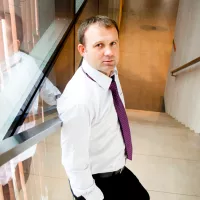
How is triathlon champion Jan Frodeno motivated?
Do you know who can overcome the murderous triathlon distance in Hawaii, i.e. 4 km swimming, 180 km cycling and finally running a marathon, i.e. 42 km in 8:14:40?
This is Jan Frodeno, Germany's best athlete, triathlete, also called a cyborg or the lord of the rings.
In order to achieve such results, he must constantly train to the max and have an iron motivation to do so.
It turns out that the key to being a master of motivation is mastering your brain and its tricks.
Here's a bit about how the brain works. The brain is built to ensure survival, not happiness. The brain works in two modes: habit and current. In the first mode, he tries to routinize most of his activities so that attention…….. wastes as little energy as possible. The brain is all about keeping us safe, and that's what it gets when it doesn't change too much, when our lives are still the same, with the same routines throughout the day.
"A new activity engages the current mode and this requires concentration, attention, awareness and it's an expensive coin because it uses energy." These are the words of the brain researcher Gerard Roth, who claims that the brain likes what it knows, I get used to it, and this in turn saves energy. The brain is sort of on standby - it's its favorite state.
New activities that we want to motivate ourselves to are additional energy for the brain, e.g. when we want to learn something, e.g. Spanish, start running, dancing, skiing, or unlearn, e.g. quit smoking, lose weight, this causes resistance to the brain in various ways, Sabotage occurs, such as: unwanted emotions of boredom, indifference or apathy, or there are insistent thoughts to stop. We have psychological effects that confirm that the brain does not like change: conservatism, confirmation, selective perception, and the ricochet effect.
In this article I will not describe them because I want to focus on motivational strategies of Jan Frodeno, who knows these effects and I know how to overcome them.
So what does Frodeno do that he is a master of motivation?
He is certainly a master of managing his brain, he is aware of the work of the brain, its tricks and can use this knowledge to his advantage.
So in short, we can put it like this: the master of motivation equals the master of managing your brain.
First of all, he is a master of internals. monologue. The inner monologue self talk is like ext. talking to yourself and your thoughts. What is the monologue about? It's about those intrusive thoughts that come to your mind when there's a lot of exertion, excruciating pain, and your body starts begging you to stop. These thoughts are, for example, stop it, I have no strength, enough, etc. Frodeno calls them "the man with the hammer", which strikes out of the blue and always appears.
During one of the Ironman competitions, the attack was so strong that it led to leg muscle spasms, after which the athlete had to lie down for a moment and felt his willpower weaken under the pressure of thoughts. Each of us has such moments and most often let go, but not our master.
Our master knows that the brain surrenders first then the body, not vice versa. Frodeno also knows that there will be temptations to finish the race and he is prepared for it. He has a plan of what to do. He endures the crisis and keeps running. He is prepared for thoughts that make him stop, and then replaces them with thoughts that cause him to continue the effort.
Secondly, it has a strategy of dividing a large section into small ones (of course in the head) thanks to which the goal is within reach, and this causes the brain to make effort because it thinks that it will be smaller than it actually is. Kind of outsmarts the brain, but for a good cause.
Third, to dissuade the brain from negative thoughts, it occupies it with imagining positive images, such as crossing finish lines, or distracting the brain with math games.
He mastered all these strategies to perfection both during training and competition. He is a master of motivation, i.e. a master of managing his brain.
Do you know who can overcome the murderous triathlon distance in Hawaii, i.e. 4 km swimming, 180 km cycling and finally running a marathon, i.e. 42 km in 8:14:40?
This is Jan Frodeno, Germany's best athlete, triathlete, also called a cyborg or the lord of the rings.
In order to achieve such results, he must constantly train to the max and have an iron motivation to do so.
It turns out that the key to being a master of motivation is mastering your brain and its tricks.
Here's a bit about how the brain works. The brain is built to ensure survival, not happiness. The brain works in two modes: habit and current. In the first mode, he tries to routinize most of his activities so that attention…….. wastes as little energy as possible. The brain is all about keeping us safe, and that's what it gets when it doesn't change too much, when our lives are still the same, with the same routines throughout the day.
"A new activity engages the current mode and this requires concentration, attention, awareness and it's an expensive coin because it uses energy." These are the words of the brain researcher Gerard Roth, who claims that the brain likes what it knows, I get used to it, and this in turn saves energy. The brain is sort of on standby - it's its favorite state.
New activities that we want to motivate ourselves to are additional energy for the brain, e.g. when we want to learn something, e.g. Spanish, start running, dancing, skiing, or unlearn, e.g. quit smoking, lose weight, this causes resistance to the brain in various ways, Sabotage occurs, such as: unwanted emotions of boredom, indifference or apathy, or there are insistent thoughts to stop. We have psychological effects that confirm that the brain does not like change: conservatism, confirmation, selective perception, and the ricochet effect.
In this article I will not describe them because I want to focus on motivational strategies of Jan Frodeno, who knows these effects and I know how to overcome them.
So what does Frodeno do that he is a master of motivation?
He is certainly a master of managing his brain, he is aware of the work of the brain, its tricks and can use this knowledge to his advantage.
So in short, we can put it like this: the master of motivation equals the master of managing your brain.
First of all, he is a master of internals. monologue. The inner monologue self talk is like ext. talking to yourself and your thoughts. What is the monologue about? It's about those intrusive thoughts that come to your mind when there's a lot of exertion, excruciating pain, and your body starts begging you to stop. These thoughts are, for example, stop it, I have no strength, enough, etc. Frodeno calls them "the man with the hammer", which strikes out of the blue and always appears.
During one of the Ironman competitions, the attack was so strong that it led to leg muscle spasms, after which the athlete had to lie down for a moment and felt his willpower weaken under the pressure of thoughts. Each of us has such moments and most often let go, but not our master.
Our master knows that the brain surrenders first then the body, not vice versa. Frodeno also knows that there will be temptations to finish the race and he is prepared for it. He has a plan of what to do. He endures the crisis and keeps running. He is prepared for thoughts that make him stop, and then replaces them with thoughts that cause him to continue the effort.
Secondly, it has a strategy of dividing a large section into small ones (of course in the head) thanks to which the goal is within reach, and this causes the brain to make effort because it thinks that it will be smaller than it actually is. Kind of outsmarts the brain, but for a good cause.
Third, to dissuade the brain from negative thoughts, it occupies it with imagining positive images, such as crossing finish lines, or distracting the brain with math games.
He mastered all these strategies to perfection both during training and competition. He is a master of motivation, i.e. a master of managing his brain.
12 users upvote it!
0 answers